M.Ch. Neurosurgery from AIIMS, New Delhi · Fellowship in Endovascular Neurosurgery, GB Pant Institute — Dr. Simranjeet Singh serves as Director, Dashvanth Healthcare, Krishna Nagar, Delhi and Consultant Neurosurgeon at Max Smart SuperSpeciality Hospital, Saket.
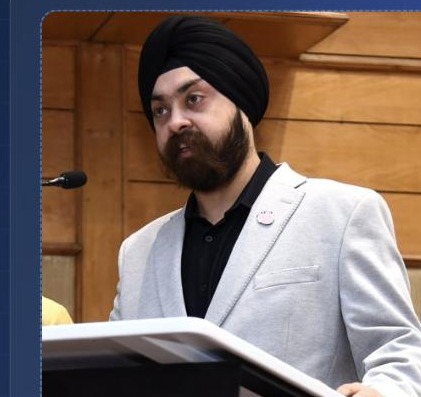
Dr. Simranjeet Singh is a Consultant Neurosurgeon at Max Smart SuperSpeciality Hospital, Saket, New Delhi and Director at Dashvanth Healthcare, New Delhi. He completed his M.Ch. Neurosurgery from the All India Institute of Medical Sciences (AIIMS), New Delhi — one of India's most prestigious neurosurgical training programmes — followed by a Fellowship in Endovascular Neurosurgery from Govind Ballabh Pant Institute of Postgraduate Medical Education & Research, New Delhi.
With specialised expertise spanning complex brain tumour microsurgery, endovascular neurosurgery, minimally invasive spine surgery, and acute stroke intervention, Dr. Singh brings a uniquely comprehensive skill set to the care of patients with neurological disorders. He has authored indexed publications in international journals and has presented at national and international neurosurgical conferences.
Every patient who walks through my door carries a story — of pain, of fear, and of hope. My commitment is not merely to perform surgery, but to listen, to explain clearly, and to walk alongside each person through what may be the most difficult chapter of their life.
Contributing to the global body of neurosurgical knowledge through peer-reviewed research in international medical journals.
Singh S, Kedia S, Garg A, Kumar H, Singh G. DNET presenting with bleed: An infrequent event – Histopatho-radio-surgical report. Interdisciplinary Neurosurgery 2021;23:100890.
doi:10.1016/j.inat.2020.100890 ↗Singh S, Kedia S, Singh Rai HI, Varshney G. Letter to the Editor regarding "One and Done: Multimodal Treatment of Pediatric Cerebral Arteriovenous Malformations in a Single Anesthesia Event." World Neurosurgery 2020;133:440.
doi:10.1016/j.wneu.2019.08.220 ↗Singh S, Verma S. Protective Effects of Obstructive Sleep Apnea on Outcomes After Subarachnoid Hemorrhage: A Nationwide Analysis. Neurosurgery 2021;88:E486–7.
doi:10.1093/neuros/nyab047 ↗Chandra PS, Ghonia R, Singh S, Garg K. Anomalous Vertebral Artery During Cranio Vertebral Junction Surgery Using DCER Approach and Its Repair. Neurological India 2021;69:315.
doi:10.4103/0028-3886.314543 ↗Phalak M, Lomi N, Ganeshkumar A, Singh S, et al. Gamma Knife Radiosurgery for Uveal Melanoma: Our Experience and Thematic Review. Neurological India. 2023;71(Supplement):S168–S73.
Makkar N, Chandra T, Agrawal P, Bansal H, Singh S, et al. Evaluating Awareness and Practices Pertaining to Radioactive Waste Management among Scrap Dealers in Delhi, India. PLoS ONE 2014;9:e91579.
doi:10.1371/journal.pone.0091579 ↗Singh D, Singh S, Katiyal A. Evolution of endovascular therapy. In: Borkar SA, Moriadi AV, editors. Progress in Clinical Neurosciences. Vol. 38. New Delhi: Thieme; 2025. p. 243–256.
SkullBaseCon 2024, Delhi
Neurological Society of India — Board of Education, AIIMS Delhi
26th East Asian Medical Students' Conference, Tokyo Medical & Dental University, Tokyo, Japan
SkullBaseCon 2024 & DNACon 2025, Delhi; Podium presenter, NeuroVascon 2024, Jaipur
Published in World Neurosurgery, Interdisciplinary Neurosurgery, Neurological India, PLoS ONE and others.
AIIMS-trained, endovascular fellowship-equipped, and genuinely patient-first — offering the highest level of neurosurgical care in Delhi NCR.
M.Ch. Neurosurgery from AIIMS, New Delhi — India's most rigorous neurosurgical training programme — combined with an Endovascular Fellowship from GB Pant Institute.
Dedicated fellowship in endovascular neurosurgery — enabling minimally invasive catheter-based treatment for aneurysms, AVMs, stroke, and vascular brain conditions.
Trained in time-critical thrombectomy and acute stroke interventions — restoring blood flow and minimising neurological damage in the critical window.
Trained and experienced in advanced neuro-imaging, modular operating theatres, and dedicated neuro-ICU environments — Dr. Singh brings that high-level expertise and precision directly to every patient he treats.
Every patient receives a full explanation of their condition and all options. Surgery is always the last resort — never the first recommendation.
Indexed publications in international peer-reviewed journals, faculty presenter at SkullBaseCon and DNACon, and former Assistant Professor at GB Pant Institute — an academically engaged practitioner.
Expert diagnosis and treatment across the full spectrum of brain, spine, and neurovascular conditions.
Interruption of blood flow or vessel rupture causing sudden neurological symptoms. A time-critical emergency.
A weakened, bulging vessel that can rupture without warning — causing life-threatening haemorrhage inside the skull.
Bleeding within or around the brain creating dangerous pressure that can rapidly impair brain function.
Abnormal cell growth ranging from benign meningiomas to aggressive glioblastomas — each requiring tailored treatment.
Abnormal tangles of arteries and veins bypassing normal circulation — increasing haemorrhage and seizure risk.
Growths on the pituitary gland disrupting hormones — causing vision problems, headaches, and systemic imbalances.
Tumors arising from glial cells — from slow-growing low-grade lesions to aggressive glioblastoma.
Typically benign tumors growing from the meninges — often treatable with excellent long-term outcomes.
Complex growths at the brain's base — requiring highly specialised minimally invasive surgical approaches.
Excess CSF in brain ventricles causing increased pressure — effectively treated with VP shunt surgery.
Narrowing of the neck arteries supplying the brain — a major stroke risk factor, treatable with stenting or surgery.
Severe facial pain attacks — one of medicine's most painful conditions, curable with MVD surgery.
Age-related degeneration of neck vertebrae causing pain, stiffness, and nerve or cord compression.
Lower spine degeneration causing back pain, stiffness, and nerve compression (sciatica).
Prolapsed, herniated, or degenerated discs compressing nerves and causing back and leg pain.
Trauma to the spinal cord or vertebrae — potentially causing pain, loss of movement, or paralysis.
Transient Ischaemic Attack — a critical warning sign of impending stroke. Urgent evaluation essential.
Tumor arising from star-shaped brain cells — ranging from benign to highly malignant, requiring surgery and radiation.
Median nerve compression at the wrist causing numbness, tingling, and hand weakness.
Rare congenital vascular brain disorder in newborns — best treated with endovascular techniques.
Recurrent seizures from abnormal brain electrical activity. Surgical options available for drug-resistant cases.
Neurological sleep conditions including sleep apnea and parasomnias — evaluated with specialist expertise.
From minimally invasive endovascular techniques to complex open brain surgery — every procedure performed with precision and complete care.
Emergency mechanical clot removal from a brain artery — the most effective acute stroke treatment, restoring blood flow and preventing permanent disability.
⚡ EmergencyMinimally invasive platinum coil filling of a brain aneurysm via catheter — preventing rupture without open brain surgery.
🔬 Minimally InvasiveMesh stent placement inside a narrowed carotid artery to restore blood flow and dramatically reduce stroke risk.
🔬 Minimally InvasiveMicrosurgical titanium clip placement at the neck of a brain aneurysm — permanently eliminating rupture risk.
🧠 MicrosurgeryCatheter-based embolisation blocking blood supply to arteriovenous malformations — reducing size before or as definitive treatment.
🔬 Minimally InvasiveKeyhole craniotomy using advanced neuronavigation and intraoperative monitoring for safe tumour removal.
🔬 Minimally InvasivePre-operative blocking of blood supply to vascular brain tumours to reduce intraoperative bleeding significantly.
🧠 SurgicalScarless transsphenoidal removal of pituitary tumours through the nose — no craniotomy, faster recovery.
🔬 Minimally InvasiveTemporary skull opening to access and treat brain tumours, haemorrhage, infections, or traumatic injuries.
🧠 Open SurgeryPrecision surgery separating a compressing blood vessel from a cranial nerve — definitive cure for trigeminal neuralgia.
🧠 MicrosurgeryReplacing a damaged cervical disc with an artificial implant — preserving neck movement while relieving arm pain.
🦴 SpinePermanent joining of vertebrae to eliminate painful motion and provide long-term spinal stability.
🦴 SpineStabilisation with rods, screws, and plates following spinal fractures, trauma, or severe instability.
🦴 SpineDrainage tube implantation from brain ventricles to abdomen — relieving dangerous CSF pressure in hydrocephalus.
🧠 SurgicalSurgical electrode implantation delivering targeted electrical pulses — highly effective for Parkinson's disease.
⚡ NeuromodulationImage-guided catheter techniques for diagnosing and treating vascular brain and spine diseases with minimal invasiveness.
🔬 Minimally InvasiveEvery minute lost = 1.9 million brain cells destroyed. Do not wait.
Stories of healing, recovery, and renewed hope from patients who trusted Dr. Singh with their care.
"After my mother had a stroke, Dr. Singh performed the thrombectomy within hours and she walked out in 10 days. He is a miracle worker and a genuinely kind doctor."
"I had trigeminal neuralgia for 3 years — unbearable pain. After Dr. Singh's MVD surgery, I woke up completely pain-free. He gave me my life back."
"My father had a brain tumour. Dr. Singh was the only doctor who gave us a clear plan and performed a minimally invasive removal. He is now completely fine."
"Two surgeons told me I needed major open spine surgery. Dr. Singh offered a minimally invasive option. Three weeks later I was back at work."
"Our 14-year-old son was diagnosed with a brain AVM. Dr. Singh's team performed embolisation followed by surgery. Today he is completely healthy."
📲 FOLLOW DR. SINGH — Stay Updated on Brain & Spine Health
Links will go live once profiles are set up — check back soon
Honest, clear answers to help you navigate your neurological care journey with confidence.
Whether you have a scheduled neurological concern or an urgent issue — reach Dr. Singh through any of the channels below.
Connect on Social Media
Social profiles being set up — links will be live shortly