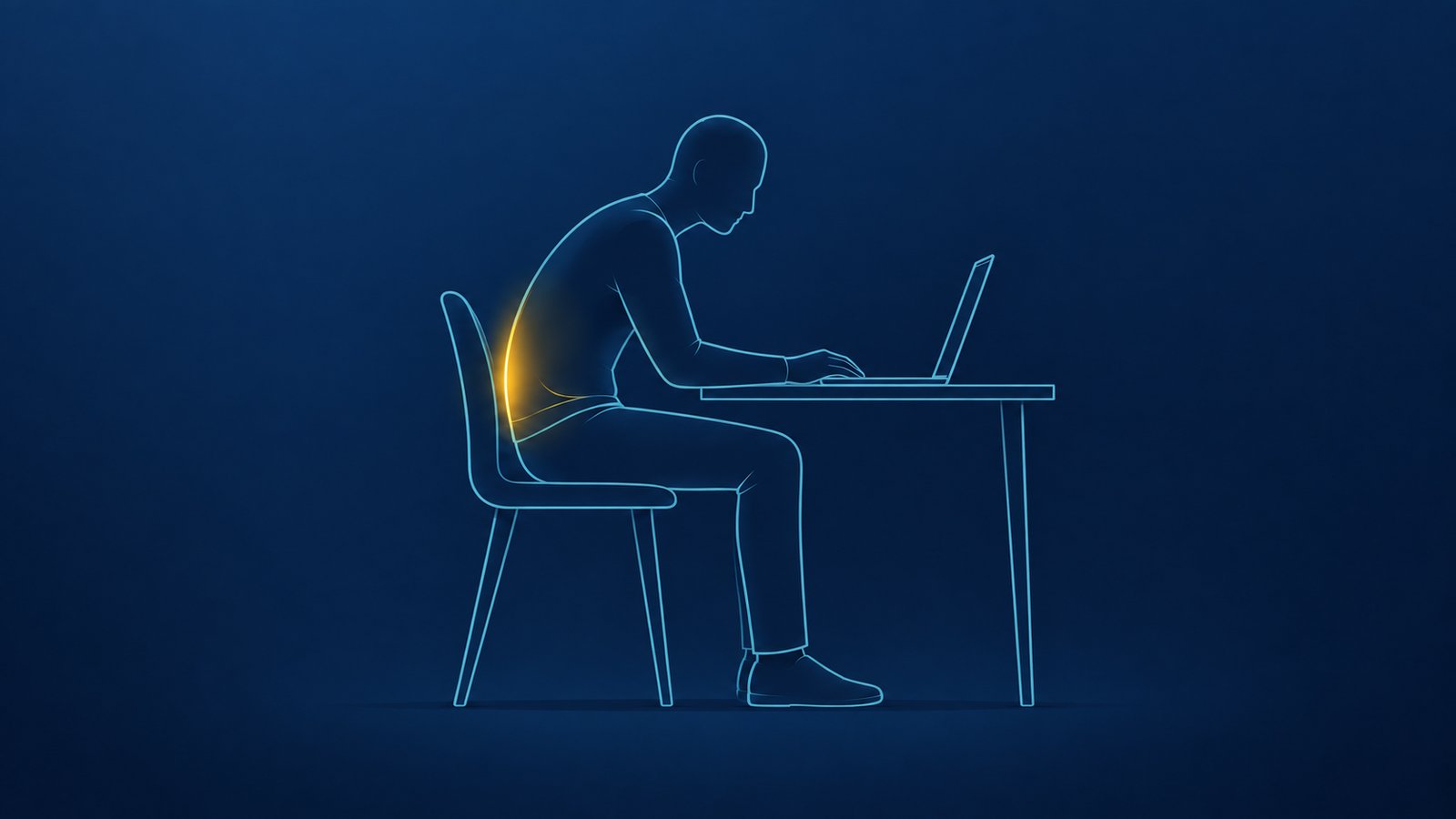
It usually starts small. You bend down to pick up a bag, or you get up from the sofa after a long evening of sitting, and something in your lower back catches — a dull ache, sometimes a sharp pull. Or maybe there’s no single moment at all. You just notice, one morning, that your back feels stiff before you’ve even gotten out of bed, and it takes a few minutes of careful movement before you feel like yourself.
Most people who come to see me with back pain describe it the same way: it’s not one thing, it’s everything. It’s the ache that sits behind your desk with you at work. It’s the twinge when you turn over in bed at night. It’s the hesitation before you bend to tie your shoelaces. Back pain rarely announces itself as a medical emergency — it just quietly makes ordinary life harder, and that’s exactly why so many people put up with it far longer than they should.
Why it happens
The lower back does an enormous amount of work without ever getting credit for it. It holds you upright when you sit, absorbs shock when you walk, and twists and bends every time you reach for something. Given how much load passes through it every single day, it’s not surprising that it’s one of the most common reasons people end up in a doctor’s clinic — neurosurgeon or otherwise.
Most back pain comes down to a handful of familiar culprits. Muscle strain from lifting something awkwardly, or from a workout your body wasn’t quite ready for. Long hours in a chair that doesn’t support your lower spine properly, which weakens the muscles that are supposed to be holding things together. The discs between your vertebrae — small cushions that lose some of their water content and flexibility as we age — can bulge or press slightly on a nearby nerve, which is when pain starts running down into the hip or leg rather than staying in the back. And sometimes it’s simply poor posture repeated thousands of times a day: the way you hunch over a phone, or sit with your laptop on your lap on the bed, adds up in ways that aren’t obvious until the ache is already there.
None of this means something is badly wrong with your spine. In the vast majority of cases, back pain is mechanical — it’s about load, posture, and muscle support — not about disease.
How it shows up in daily life
This is the part that doesn’t get talked about enough, because back pain isn’t really about the back — it’s about everything the back touches.
Sitting becomes a negotiation. You shift in your chair every few minutes, you stack a cushion behind you, you stand up more often than the meeting really calls for, just to reset. Sleep gets disrupted too — you find yourself testing different positions in the middle of the night, and mornings start with stiffness instead of rest. Simple movements, like bending to pick something off the floor or getting in and out of a car, start requiring a plan rather than happening automatically. Long drives become dreaded rather than routine, because thirty minutes in one position is enough to set off a dull throb by the time you arrive. Even something as small as reaching for a shelf, or carrying a child, comes with a half-second of caution that wasn’t there before.
At work, this translates into difficulty concentrating — a background ache is a surprisingly effective distraction — and for anyone whose job involves standing, lifting, or long commutes, it can start affecting performance and mood well before it becomes visibly serious.
What actually helps — and what doesn’t
The good news is that most back pain responds well to fairly simple, consistent habits.
What helps: staying moderately active rather than resting completely — gentle walking most days keeps the muscles around the spine engaged and actually speeds up recovery more than lying in bed. Correcting how you sit, with your lower back supported and your screen at eye level, so you’re not unconsciously slouching for eight hours a day. Building basic core and back strength through simple exercises — even 10-15 minutes a few times a week makes a real difference over a couple of months. Using heat for stiffness and ice for a fresh strain in the first day or two. And getting a mattress and pillow that actually support your spine’s natural curve, rather than one that’s simply “comfortable” in the showroom.
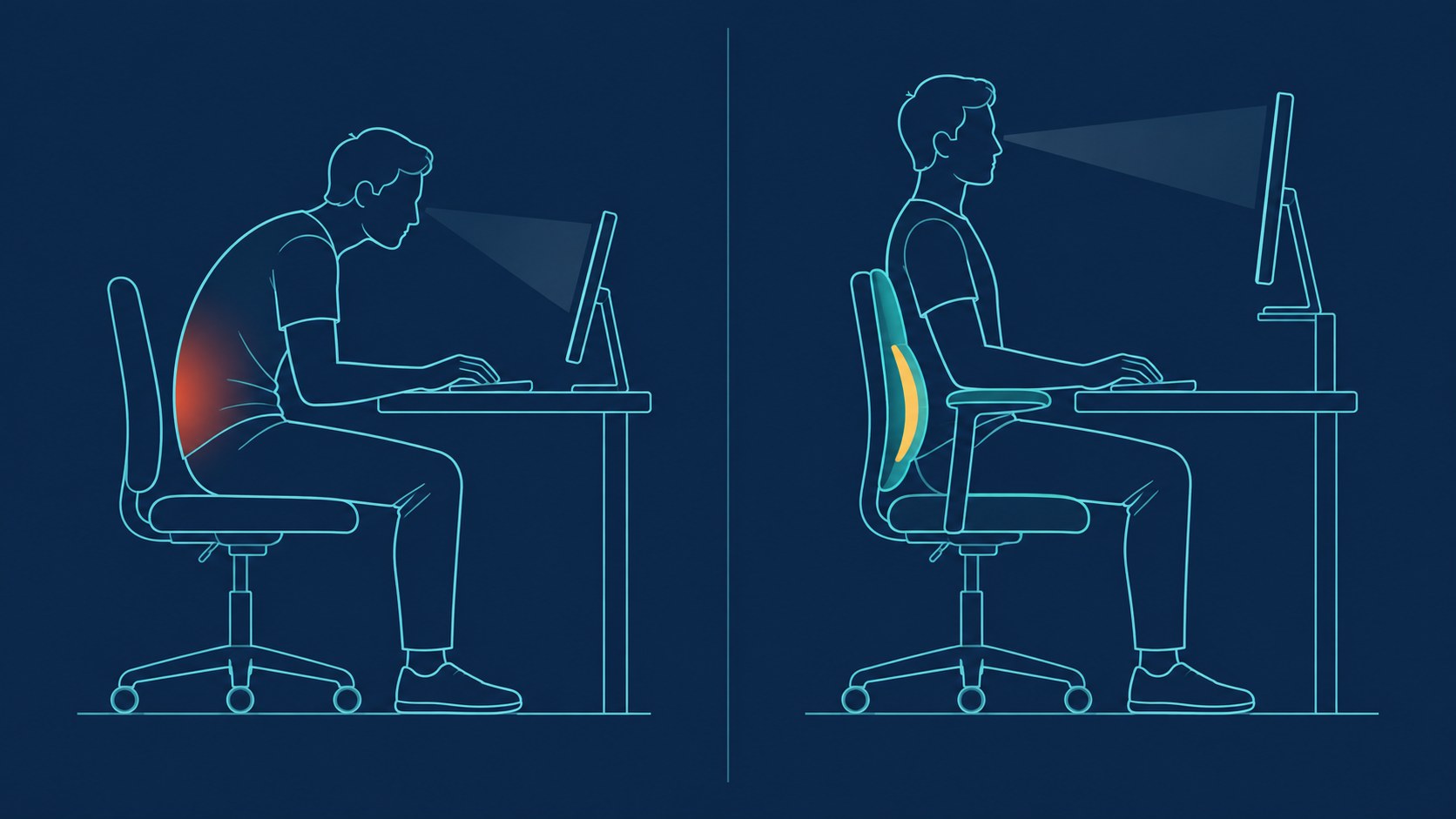
What doesn’t help, and often makes things worse: complete bed rest for more than a day or two, which weakens the very muscles you need for support. Ignoring posture at work because “there’s no time” — this is usually the single biggest driver of recurring pain. Popping painkillers repeatedly without addressing the underlying cause, which masks the problem rather than fixing it. And pushing through pain during exercise or lifting, which can turn a minor strain into a more significant injury.
When it’s time to see a neurosurgeon
Most back pain settles within a few weeks with the steps above, and doesn’t need a specialist at all. But there are a few clear, concrete signs worth paying attention to rather than pushing through: pain that spreads down one leg past the knee, especially with numbness or tingling; weakness in a leg or foot — for instance, if you notice you’re dragging a foot slightly or struggling to climb stairs; pain that wakes you up at night on a regular basis rather than just being uncomfortable when you’re already awake; or any change in bladder or bowel control, which — while rare — should be checked immediately rather than waited out.
None of these signs mean something catastrophic is happening. Most of the time, they simply mean it’s worth getting an examination and, if needed, an imaging scan to understand exactly what’s going on and to rule out a nerve being compressed — something that’s very treatable once identified early.
If your back pain has been sticking around for more than a few weeks despite rest and basic care, or if it’s started affecting how you sleep, work, or move through your day, it’s reasonable to get it looked at rather than guessing. I see this at both Dashvanth Healthcare in Krishna Nagar and as a consultant at Max Smart SuperSpeciality Hospital in Saket, and in most cases, a proper evaluation brings real clarity — and often a much simpler solution than people expect.